
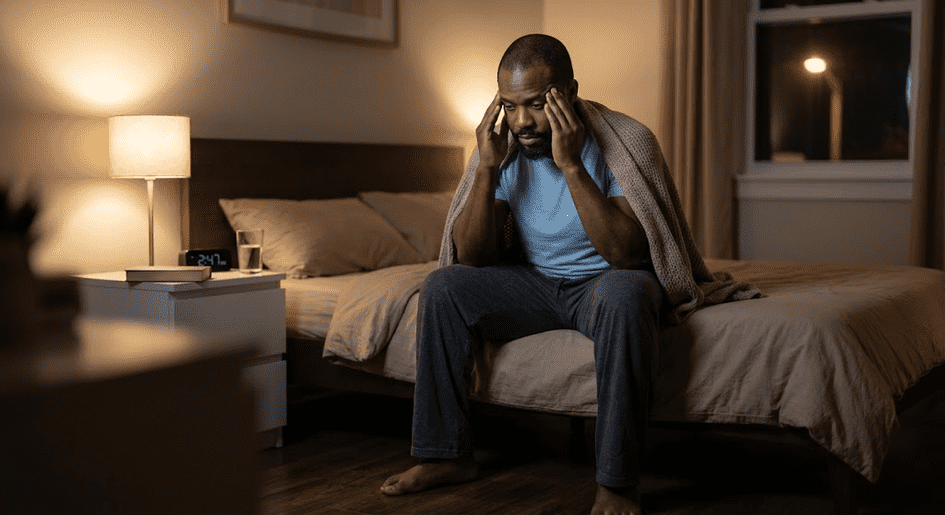
Insomnia is more than occasionally having a bad night. Persistent difficulty falling asleep, staying asleep, waking too early, or feeling unrefreshed can affect concentration, mood, energy, and daily functioning. The National Heart, Lung, and Blood Institute explains that insomnia can interfere with daytime activities and concentration. The condition can also occur alongside anxiety, depression, PTSD, medical conditions, medication effects, and lifestyle factors.
What Insomnia Looks Like
Possible symptoms include difficulty falling asleep, repeated nighttime waking, waking too early, unrefreshing sleep, daytime sleepiness, irritability, anxiety, low mood, and difficulty focusing. Symptom guidance recommends keeping track of symptoms and sharing them with a healthcare professional.
Common Causes of Insomnia
Insomnia can have many contributors, including schedule changes, shift work, environmental disruption, lifestyle habits, stress, caffeine, nicotine, and alcohol. Mayo Clinic’s overview of insomnia causes also notes that mental health disorders, medications, and medical conditions can contribute.
How Anxiety Can Affect Sleep
Worry can keep the mind active at bedtime. A person may repeatedly review conversations, anticipate problems, or feel unable to relax. The resulting sleep loss can then make concentration and emotional regulation harder the next day.
How Depression Can Affect Sleep
Depression can be associated with sleeping too little or too much, changes in routine, low energy, and early-morning waking. When insomnia occurs with persistent mood changes, the wider mental health pattern should be considered rather than treating sleep as an isolated problem.
How PTSD Can Affect Sleep
Trauma-related symptoms can disrupt sleep through nightmares, intrusive memories, hypervigilance, and difficulty feeling safe enough to relax. PTSD care can address trauma-related symptoms as part of a broader psychiatric treatment plan.
When Insomnia May Need Evaluation
Consider an evaluation when sleep problems are frequent, persistent, affect daytime functioning, or occur alongside significant mood or anxiety symptoms. Diagnostic guidance describes chronic insomnia as difficulty sleeping at least three nights a week for three months or longer. A clinician may ask about sleep timing, medications, caffeine, nicotine, alcohol, medical conditions, mental health symptoms, snoring, breathing problems, and other possible sleep disorders.
Evidence-Based Treatment
Treatment depends on the cause. Cognitive behavioral therapy for insomnia, or CBT-I, is a commonly recommended first treatment for long-term insomnia. Medication may be appropriate in selected cases and should be discussed with a clinician. True Light Wellness insomnia relief and medication management can be considered within an individualized mental health plan.
Practical Sleep Ideas
Consistent sleep habits can support treatment. Helpful steps include:
- Keep a consistent bedtime and wake time, including weekends.
- Keep the bedroom cool, quiet, dark, and comfortable.
- Reduce caffeine, nicotine, and alcohol near bedtime.
- Limit stimulating screens and activities close to bedtime.
- Keep a sleep diary when sleep problems are persistent.
What to Avoid
Avoid changing prescription medications or relying on alcohol, sedating substances, or random sleep products without professional guidance. Some substances and medications can worsen sleep or create additional risks. If you regularly use something to make yourself sleep, tell your healthcare professional so the full picture can be considered.
Sleep and Mental Health Work Both Ways
Sleep and mental health can influence one another. Anxiety, depression, and trauma may disrupt sleep, while ongoing sleep loss can make concentration, mood regulation, and stress management harder. Treating both sides of the cycle can therefore be important.
Conclusion
Persistent insomnia deserves attention, especially when it affects daytime functioning or occurs with anxiety, depression, PTSD, or other symptoms. Understanding the cause is often more useful than simply trying to force sleep. Evidence-based approaches, including CBT-I and individualized clinical care, can help many people improve sleep.
Call to Action
If sleepless nights are affecting your mood, concentration, relationships, or daily life, True Light Wellness offers insomnia relief, psychiatric evaluation, medication management, and telehealth services. Call us at (269) 248-8415 or schedule an appointment online to discuss your sleep symptoms and treatment options.
Frequently Asked Questions
What are common symptoms of insomnia?
Difficulty falling asleep, repeated waking, waking too early, unrefreshing sleep, daytime sleepiness, irritability, and difficulty concentrating are common symptoms.
What can cause insomnia?
Stress, schedule changes, poor sleep habits, caffeine, nicotine, alcohol, medications, medical conditions, anxiety, depression, PTSD, and other factors can contribute.
When is insomnia considered chronic?
NHLBI describes chronic insomnia as occurring at least three nights a week for three months or longer.
What is CBT-I?
Cognitive behavioral therapy for insomnia is a structured treatment that addresses thoughts and behaviors that maintain insomnia and teaches strategies for improving sleep.
When should I seek help?
Seek professional evaluation when insomnia persists, affects daytime functioning, or occurs with significant mental health or physical symptoms.